
Home → Conditions We Address → Perimenopause Support
PERIMENOPAUSE · HORMONAL HEALTH · RECOVERY · NEWPORT BEACH
Perimenopause Treatment in Newport Beach

Perimenopause can affect far more than menstrual cycles and hot flashes. Many women experience a combination of brain fog, fatigue, poor sleep, mood changes, increased stress sensitivity, frozen shoulder, joint and tendon pain, changes in body composition, and reduced physical resilience.
LeCore provides personalized perimenopause recovery support in Newport Beach focused on cognitive clarity, nervous-system regulation, mobility, inflammation support, metabolic health, sleep, energy, and overall recovery.
Our approach can incorporate hard-shell 2.0 ATA HBOT, red light therapy, PEMF, EWOT, neuro-based chiropractic, hands-on recovery, supplement and nutrition support and individualized wellness planning.
What Is Perimenopause?
Perimenopause is the transition leading up to menopause, when ovarian hormone production becomes more variable and menstrual cycles often begin to change. For many women, the transition is not just about hot flashes or irregular periods. It can cause:
Brain Fog & Poor Concentration
Difficulty focusing, slower thinking, forgetfulness, word-finding difficulty, and reduced mental endurance can become more noticeable.
Fatigue & Low Energy
Some women feel physically and mentally depleted even when their activity level has not changed.
Sleep Disruption
Difficulty falling asleep, waking during the night, night sweats, or waking unrefreshed can significantly affect recovery.
Mood Changes & Irritability
Anxiety, irritability, emotional reactivity, low stress tolerance, and feeling overwhelmed can become more pronounced.
Frozen Shoulder & Joint Stiffness
Shoulder mobility loss, joint stiffness, and musculoskeletal discomfort can become more common during midlife.
Metabolic Changes
Changes in body composition, abdominal fat, insulin sensitivity, energy regulation, and exercise response can become more noticeable.
WOMEN'S COGNITIVE HEALTH
Perimenopause Brain Fog & Cognitive Changes
Brain fog can feel like losing your train of thought, forgetting names or tasks, difficulty finding words, poor concentration, slower processing, reduced multitasking ability, and feeling mentally less sharp.
Work & Executive Function
Focus · decision-making · productivity · multitasking
Memory & Recall
Short-term memory · word finding · attention · processing
Cognitive Endurance
Mental stamina · concentration · stress tolerance · recovery
Perimenopause Fatigue & Low Energy
Perimenopause fatigue can feel different from ordinary tiredness. Some women describe waking exhausted, afternoon crashes, slower workout recovery, physical heaviness, poor motivation, and feeling depleted after normal daily activity.
Waking Unrefreshed
Sleep quantity can look adequate while sleep quality and recovery still feel poor.
Afternoon Energy Crashes
Energy regulation can become less stable across the day.
Slower Workout Recovery
Training that once felt manageable can take longer to recover from.
NERVOUS SYSTEM & STRESS
Mood Changes & Nervous System Imbalance
Hormone fluctuation, poor sleep, chronic stress, pain, and fatigue can amplify each other. Some women feel wired but tired, overstimulated, emotionally reactive, or less resilient than usual.
Irritability & Anxiety
Stress can feel harder to regulate when sleep and recovery are compromised.
Wired but Tired
High internal stress with low physical energy is a common complaint.
Reduced Stress Tolerance
Everyday demands can feel more intense when recovery capacity is reduced.
Frozen Shoulder, Joint Pain & Perimenopause
Frozen Shoulder
Pain, stiffness, and progressive loss of shoulder motion can become a major midlife mobility problem.
Tendon Pain
Achilles pain, tennis elbow, golfer’s elbow, and plantar fascia irritation can feel more stubborn.
Shoulder & Rotator Cuff Pain
Changes in mobility, tendon loading, sleep, and recovery can make shoulder problems more persistent.
Soft-Tissue Recovery
Sleep and overall recovery capacity can influence how the body responds to physical stress.
Joint Stiffness
Some women notice more stiffness through the shoulders, hips, knees, hands, or spine.
Inflammatory Symptom Patterns
Pain sensitivity, stiffness, and recovery can shift together during perimenopause.
Perimenopause, Metabolic Health & Body Composition
Women commonly notice changes in abdominal fat, body composition, blood sugar regulation, insulin sensitivity, appetite, cholesterol, muscle mass, exercise response, and energy stability.
Muscle Preservation
Maintaining muscle through resistance training becomes increasingly important for metabolic health and resilience.
Energy Regulation
Poor sleep and metabolic changes can contribute to daytime fatigue and unstable energy.
Exercise Recovery
Training can become more demanding to recover from as sleep and resilience shift.
How LeCore Supports Perimenopause Recovery
LeCore focuses on recovery, energy, mobility, nervous-system regulation, circulation, and overall resilience alongside appropriate medical or hormone care when needed.
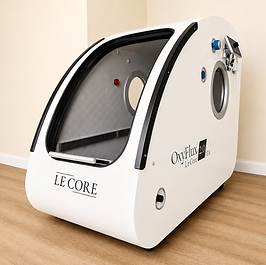

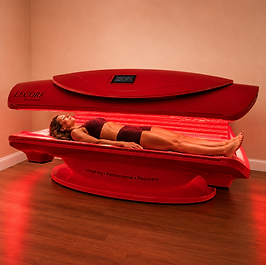


All LeCore therapies are overseen by Dr. Navid Saadati, our Clinical Director.
What a Perimenopause Recovery Plan Can Look Like
Your plan depends on your symptoms, activity level, nervous system load, autonomic imbalance, and goals.
Step 01
Identify the Pattern
Clarify whether brain fog, fatigue, sleep, mood, pain, mobility loss, inflammation, or metabolic changes are most limiting.
Step 02
Review Its Drivers
Look at sleep, stress, nutrition, activity, recent illness, medication, and recovery demand.
Step 03
Evaluate Movement
Assess posture, joint mobility, muscular tension, exercise tolerance, and nervous-system stress.
Step 04
Build the Strategy
Use HBOT, red light, PEMF, EWOT, chiropractic, and recovery support where appropriate.
Step 05
Track Response
Neuro-scans along the way to monitor focus, fatigue, sleep, mental endurance, energy, and return to normal activity.
Related Recovery Pages
Brain Fog Recovery
Tennis Elbow & Golfer's Elbow
Hyperbaric Oxygen Newport Beach
Shoulder Pain & Rotator Cuff
Back & Neck Pain Recovery
Red Light Therapy Newport Beach
Tendonitis & Overuse Injuries
Lyme Disease Recovery
PEMF Therapy Newport Beach
Perimenopause FAQs
Please reach us at 949-991-8787 or info@lecorenb.com if you cannot find an answer to your question.
PERSONALIZED PERIMENOPAUSE SUPPORT
Build Your Perimenopause Recovery Plan
Tell us what’s affecting you most—brain fog, fatigue, sleep, mood, frozen shoulder, joint or tendon pain, metabolic changes, or reduced recovery. Our team can help build a personalized plan around your symptoms and goals.